About
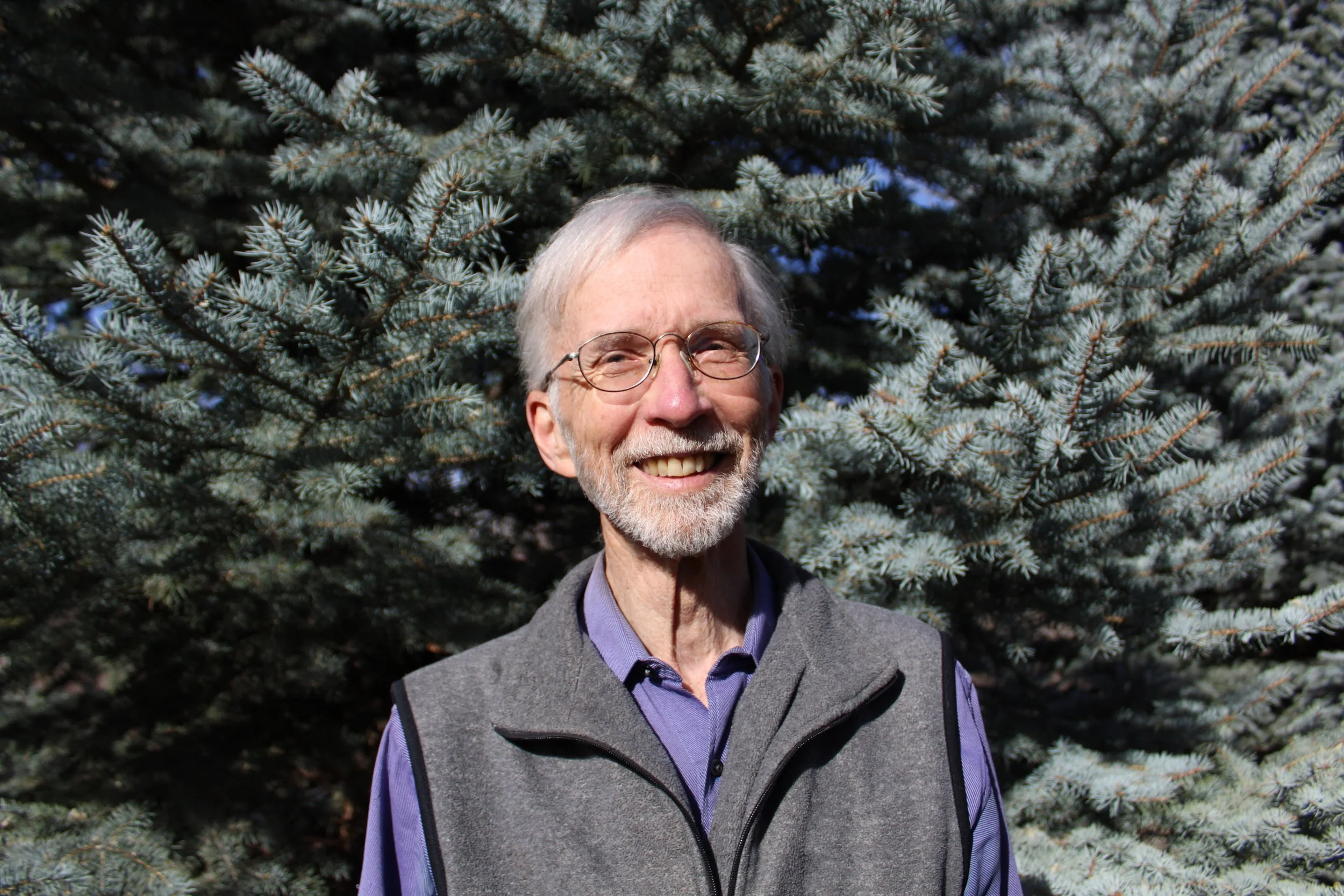
Greetings! My name is Mark Nafziger. I’m a psychologist, and have worked in Utah State University’s Counseling and Prevention Services for almost 36 years. I love Logan and Cache Valley, and am running for Logan Seat 3 on the Cache County Council. I hope to use the skills and knowledge I’ve developed during my career to serve my community and to help protect Cache County’s character and quality of life during the challenging times ahead.
I grew up in Ohio, and moved to Utah in 1990 after completing my Ph.D. at Ohio State University. In addition to counseling USU students, for the past 35 years I’ve volunteered for the State of Utah’s Critical Incident Stress Management Team. The CISM team provides debriefings and educational presentations to emergency services workers (police, firefighters, EMT’s etc.) dealing with job-related traumatic experiences.
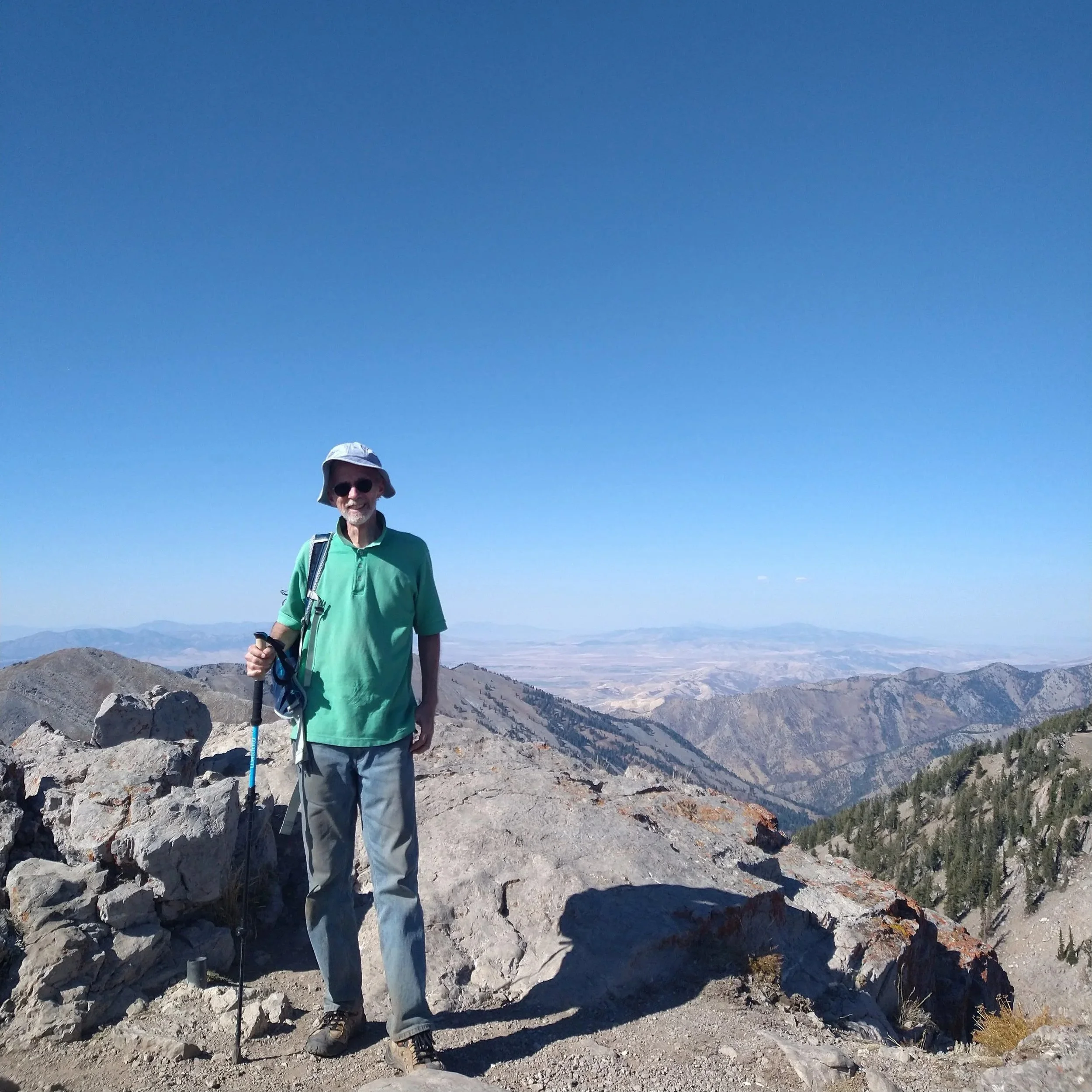
I’ve been married to my wife Cleo, a Utah native, for 45 years. We have five grown children and four growing grandchildren. I spend much of my free time gardening and doing yard work, walking (often with my dog Tavi), and enjoying Cache Valley’s mountains.
Where is Seat 3?
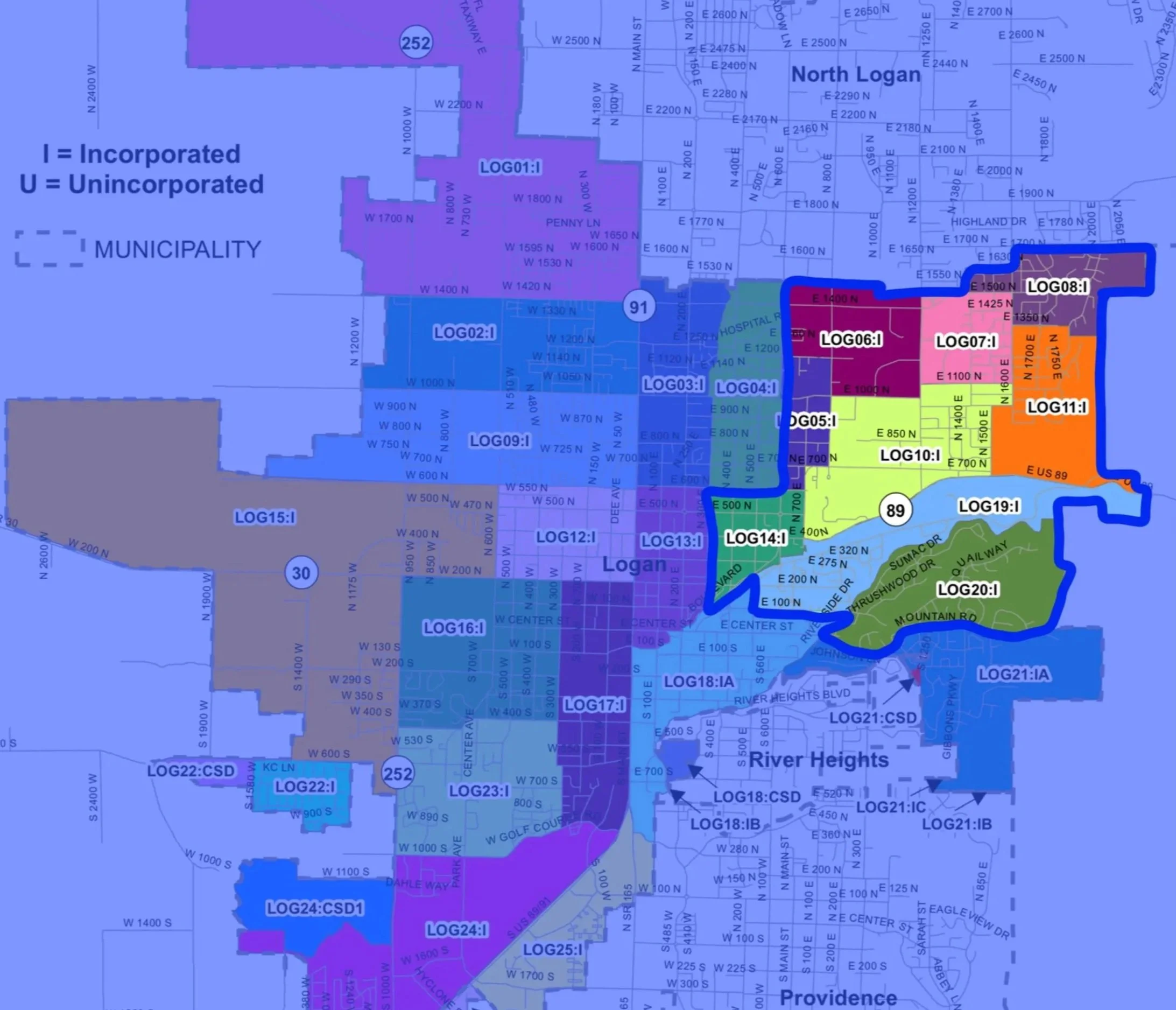
Don’t know if you can vote for Mark Nafziger? We got you! Cache County Council Logan Seat #3 includes precincts 5,6,7,8,10,11,14,19, and 20 which is up by Utah State University, parts of the Island and Boulevard as well as the north half of Cliffside.
*Fun Fact* Taken as a whole, these precincts voted for both Patrick Belmont and Kamala Harris in their respective elections.
Priorities
Giving people a choice and a voice.
Listening to constituents and others in county government.
Widening the range of perspectives heard.
Government responsiveness and engagement
Improve management of taxpayer dollars by strengthening checks and balances.
Contributing to transparency, and sound decision making by moving beyond single party decision making.
Increased accountability
Stewardship for all approach conserving open space and the opportunity to hunt, fish, hike, bike and recreate outdoors.
Prioritizing smart growth and applying proven land use planning.
Making sure decisions benefit everyone, not just a select few.
Protecting Cache County’s character and quality of life
Thoughts on data centers
Keeping Data Centers Out of Cache County 9-24-2026 update
The proposed data center center in Juab County near Mona provides one more example of a data center project developed and proposed “under the radar”. This projected sparked major local backlash after being approved via a conditional use permit which very few local residents knew about. The project was approved by the county planning commission in April during a four-minute (!!!!) meeting at which four people spoke, including the wife of the landowner where the data center would be built, a county commissioner, and one of the development partners. A land owner living across the street from the planned project only found out about it when a gas company rep came to his home asking permission to run a gas pipeline through his land to power the data center. The Mona data center would be one of Utah’s largest, spanning 361 acres and needing up to 750 megawatts of energy from Rocky Mountain Power’s grid to power it. Like the Box Elder data center, the proposed Mona project was developed in relative secrecy, shielded as much as possible from public input and potential/likely negative reactions and protests.
According to Cleanview, a market intelligence company tracking U.S. power infrastructure and data center development, as of September 2026 there were currently 40 operating and 26 proposed data centers (of various sizes) in the state of Utah. To say these proposed data centers projects are unpopular and unwanted would significantly understate local sentiments. Currently, local residents in Tooele County are fighting a 500 megawatt data center project proposed for a 585 acre area near the southern shore of the Great Salt Lake. Residents contend that it would further strain Tooele County’s already over-allocated groundwater resources and dry out local wells. They also say that wastewater and brine discharges from the proposed project would negatively impact Great Salt Lake wetlands. A proposed Red Butte project is a staggering 2,564-acre development that includes its own on-site natural gas power plant. Initial filings estimate its water usage could reach up to 1,900 acre-feet per year. Southern Utah residents have packed open-house events and planning commission meetings, and expressed strong opposition to the proposed industrialization of their rural county. Residents of the drought-prone desert environment expressed fears about the impact of the estimated 1,900 acre-feet of water required for Red Butte project on long-term water security, and the potential loss of local agricultural farmland.
Clearly most Americans, Republicans, Independents, and Democrats alike, do not want more data centers built in their communities. And for good reason. Data centers result in increased energy consumption and costs for the surrounding communities, increased water usage (especially problematic for a state in the grip of chronic drought), greater potential for infrastructure overloads and costs, more power plant emissions, problems from discharges of contaminated water, and greater levels of noise pollution. In addition, despite the strain they put on local resources and infrastructure, most data center projects have received significant tax breaks from the city or county in which they’re built.
People across the nation are now waking up to the very negative impacts of data centers on their communities and vocally opposing new projects. Still, the events of 2026 here in Utah have demonstrated that federal and state (and often county) officials will not protect us from exploitation by mega-billionaire tech company executives and other extremely wealthy predatory investors. Nor can we dreamily think there will be no data center proposals in Cache County’s future. Clearly citizens must act now to keep data centers out of their communities.
In response to growing anti-data center sentiment, on June 23rd the Cache County Council voted for a six-month moratorium on accepting or reviewing any proposals for building a data center or related power infrastructure in county’s unincorporated areas. This pause gives the County’s development department staff time to study the potential impacts of data center projects on local electricity grid capacity and water usage, and to draft updated land-use regulations. While this was a good first step, it’s disappointing that the moratorium was not accompanied by a statement from the Council opposing any future data center construction in Cache County. Since Council did not issue such a statement, county residents are left to speculate and guess as to Council members’ views concerning the possibility of data center construction, and to wonder about whether the Council is prepared to do everything in their power to oppose such a project from being hoisted on our county.
We currently have a little less than three months left until the moratorium expires (on December 23rd, after the upcoming election). It cannot be extended. We must therefore take action now to make sure we do not suffer the same fate as our neighbors in Box Elder County, a fate residents in Tooele and Juab counties are desperately trying to avoid. The time is now for all Cache County residents who recognize the importance of keeping data centers out of Cache County to contact their Council member and express their opposition to the prospect of a data center being built here. Residents should also call on all Council members to clearly state whether or not they will actively oppose any future data center construction proposals. Cache County residents have the right and an urgent need to know whether the Council’s current members will do everything legally possible to stop any data center from being built here.
I hope the Council will waste no time in clearly stating their commitment to keeping the county’s unincorporated areas free from data centers and data center-supporting power plants. Residents who live in the area of Cache County Council Seat 3 can rest assured that if I’m elected to the Council there will be at least one strong and unwavering voice of opposition to any proposal to build a data center in Cache County. Let’s keep our county free from the spreading bane of data centers, and give a clear and resounding NO!!! to the prospect of having one built in Cache County!
Initial thoughts
As the number active data centers in our country grows, so do reports of significant distress from surrounding neighborhoods and communities. As noted on the Brockovich AI Data Center Reporting website ( https://www.brockovichdatacenter.com/ ) data center impacts include:
Energy Consumption and Costs
Massive energy usage by data centers contributes to escalating energy costs for surrounding communities. Household utility bills invariably rise as the result.
Water Usage
Cooling systems require substantial water resources, straining local water supplies and ecosystems. As Utah battles chronic drought conditions with no end in sight, the demand for precious water resources to cool industrial data centers would put the Great Salt Lake and everyone living in northern Utah at significant economic and environmental risk.
Noise
Constant humming from cooling systems, generators, and substations often disrupts sleep, daily life, and wildlife in the area around a data center.
Scalability & Efficiency
Data center operations can strain local resources and infrastructure, often outpacing community planning capacity.
Other Concerns Related to Data Centers
Often hyperscale data center projects have been developed and agreed to in secret, without any public input or environment impact and feasibility studies. In addition, developers of hyperscale data centers regularly demand and receive big tax breaks. Not only do they strain community resources and infrastructure, but they fail to pay their fair share of the taxes necessary to provide the services they use. This is yet another maddening example of “reverse Robin Hoodism”, with extremely wealthy data center investors and developers being supported by communities of working people who are struggling to make ends meet.
Benefits vs. Costs
Finally, most of us receive only a small amount of benefit (e.g., medical records, diagnosis, and research, support of banking services) from the computing done by data centers. Most data center computing power is used in advertising, social media algorithms/manipulations, and (increasingly) mass surveillance. Going forward, hyperscale data centers will enable AI to cost more and more people their jobs. The rush to build data centers appears to be based primarily in the desire for vast profits by developers and mega-billion dollar tech companies. Overall, the benefits for most Americans seem tiny in comparison to the costs and negative impacts of data centers on the communities where they’re built and operated.
Responding to Data Centers
For all these reasons, opposition to the rush to build data centers around the United States is bipartisan in nature, uniting conservatives and progressives alike. Even so, this opposition has often been ignored and dismissed. While there are no reports of impending plans to build a hyperscale data center in Cache County, there is a proposal to build one in Tooele County. The experience of our neighbors to the south in Box Elder County has demonstrated that complacency would be a disastrous mistake. The people of Cache County and their government should do everything possible to keep hyperscale data centers out of our county. We need to act decisively to protect Cache County residents from predatory investors, developers, and technology companies who don’t care a whit about the people who have to live by and with data centers.
Cache County Council and Data Centers
On June 23rd the Cache County Council voted in favor of a six-month moratorium on the acceptance and review of any applications related to the construction of data centers in the unincorporated areas of Cache County. Unfortunately, this is apparently the longest moratorium allowed by state law. Hopefully this moratorium is a prelude to the Council doing everything in their power to protect Cache County residents from the numerous negative impacts data centers have on the communities where they’re built and operated. The Council needs to prepare for the “shock and awe” tactics developers often use to get data center proposals approved by developing strong land use codes which will protect our county’s residents from the rapidly spreading bane of utility-scale data centers.
County Land Development
While hyperscale data centers present the most striking example of powerful and extremely wealthy investors prioritizing their profits over the quality of life of local communities, non-data center development projects may also ignore needs and interests of county residents. Cache County government must focus on strengthening land use codes with the goal of ensuring development projects fit the area they’re proposed for, and benefit county residents as a whole. We need to act now to protect Cache County’s remaining open spaces from predatory investors or developers who are happy to sacrifice our well-being and quality of life for the sake their bottom lines.
My Promise
Anyone who supports my candidacy for Logan Seat 3 on the County Council will be voting for voting for someone who will work tirelessly to protect of our communities and remaining open spaces from those who place their personal profit above county residents’ quality-of-life. This includes committing to being a strong voice of opposition to any proposal to build a large data center in the unincorporated areas of Cache County.
Make a Contribution
Community and collaboration are at the heart of any successful campaign. Any contribution you can make is so helpful and I would be honored to have your support!
Contact Me
If you want to learn more, invite me to an event, or have questions, don’t hesitate to reach out!
Nafzigerforcountycouncil@gmail.com